Funny Clown: A Designer's Review for Real Embroidery Projects
As someone who has spent years navigating the intersection of digital design and physical thread, I approach every new machine embroidery design with a specific set of questions. Will it stitch out cleanly? Does it translate well from a screen to fabric? And most importantly, will my customers actually want to wear or display it? When I first opened the files for Funny Clown, I wasn't just looking at a cute graphic; I was evaluating a potential asset for my upcoming autumn craft fair collection and a few custom client orders.
First Impressions: Visual Personality and Design Intent
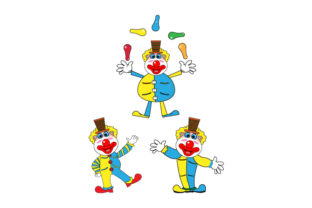
The moment you view the JPEG preview of Funny Clown, the mood is immediately established. It is playful, slightly whimsical, and undeniably nostalgic without feeling dated. As an Illustrations piece within the broader category of Graphics, it relies on bold outlines and distinct color blocking rather than photorealistic shading. This is a crucial observation for any embroiderer. Designs that depend heavily on gradients often struggle in digitization, leading to muddy results or excessive thread changes. Funny Clown, however, appears built for clarity. The shapes are robust, suggesting that the transition from a digital file to a stitched object will be smooth.
For a designer like myself, this visual confidence is reassuring. It suggests that the stitch density can be managed effectively, avoiding the dreaded "bird nesting" that plagues overly dense areas. The character's expression is engaging enough to grab attention on a shelf but simple enough to remain recognizable even when viewed from a distance. This balance is exactly what I look for when sourcing design assets for a small business where brand recognition and product appeal go hand in hand.
From Screen to Stitch: Practical Application Scenarios
Let's talk about how Funny Clown performs in real-world situations. I am currently planning a line of custom tote bags and heavy-weight sweatshirts for a local boutique. For these projects, the size and placement of the design are paramount. On a canvas tote bag, Funny Clown would likely sit perfectly centered on the front panel. The sturdy nature of the illustration means it can handle the texture of the cotton weave without losing definition. Imagine a customer carrying this bag through a farmer's market; the bright colors and clear lines would stand out against the natural fabric, acting as a conversation starter.
I also see immense potential for this design in sweatshirt embroidery. Placing the clown on the left chest area creates a subtle, personalized touch, while a larger version on the back could serve as a statement piece for a group order. The versatility extends to embroidered patches as well. Because the outline is strong, cutting the design out after stitching should yield a clean edge, perfect for ironing onto denim jackets or backpacks. For those of us running an Etsy shop or selling at craft fairs, having a design that works across multiple product types—like baby clothes, aprons, or pillow covers—maximizes the return on investment for purchasing the digital embroidery file.
Consider the holiday season. Funny Clown fits seamlessly into a whimsical Christmas theme or a carnival-inspired party favor. It could be the centerpiece of a personalized gift for a child's birthday or a fun addition to nursery decor. The key here is the emotional connection; parents love items that bring joy to their children, and this design delivers that promise visually before the needle even touches the fabric.
Navigating Challenges: Where Caution Is Required
While Funny Clown is a strong candidate for many projects, experienced designers know that no design is universally perfect. There are scenarios where this specific illustration requires careful handling. If you plan to use this on very thin or stretchy fabrics, such as a lightweight jersey tee or silk, the fill stitch areas might pucker if not stabilized correctly. The weight of the thread needed to cover the clown's features could distort delicate material.
Similarly, placing this design on a curved surface like a baseball cap demands precision. The roundness of the clown's face and hat needs to conform to the cap's dome without distorting the proportions. You must ensure your hoop setup accommodates the curve properly. Additionally, if you are working with dark fabrics, the contrast becomes critical. While the design looks great in the JPEG, you must verify that the thread colors provided in the file offer enough pop against black or navy backgrounds. Sometimes, a white underlay is necessary to make the colors true, which adds time and cost to the project.
Another consideration is the level of detail in smaller sizes. If you attempt to shrink Funny Clown down to fit a tiny cuff or a small patch, the finer details of the facial features may get lost. In embroidery, less is often more. It is better to scale the design up to let the stitches breathe than to cram too much information into a small hoop size.
Technical Workflow and Professional Standards
Before committing to a production run, I always follow a strict testing protocol. First, I download the embroidery file formats included in the ZIP—specifically checking the SVG 1.1, Ai 10, and EPS 10 options to ensure compatibility with my software. Even though the package includes a JPEG for reference, the vector-based files are what matter for scaling and editing. Always test the design on scrap fabric that matches your final product's texture. This allows you to check the running stitch quality and ensure the satin stitch borders are smooth.
Check the stitch density closely. If the clown's nose or shoes appear too thick, they might cause tension issues during stitching. Adjustments in your machine settings or the digitizing software might be needed. Also, remember to use the appropriate stabilizer. For a tote bag design, a cut-away stabilizer provides the longevity needed for frequent washing, whereas a tear-away might suffice for a decorative pillow cover.
Finally, consider the commercial aspect. If you are an Etsy seller or a craft business owner, confirm the licensing terms of the digital product before selling finished items. Can you sell the embroidered goods? Can you sell the digital file itself? Understanding these boundaries protects your business reputation. Furthermore, creating high-quality printable mockups of how Funny Clown looks on various products can significantly boost buyer engagement and trust in your online listings.
Final Verdict on Product Value
In conclusion, Funny Clown is a solid addition to any embroidery project library. It offers a blend of charm and technical reliability that makes it suitable for both hobbyists and professional decorators. Its strength lies in its clear lines and adaptable style, making it ideal for custom apparel, home goods, and unique gifts. By respecting the limitations of fabric types and taking the time to test stitch-outs, you can ensure that the final finished product meets the high standards your customers expect. Whether you are building a brand around whimsical designs or simply adding a touch of fun to a client's order, this commercial embroidery asset has the potential to deliver consistent, high-quality results.